
Keynotes and briefings on economic power
Research-based talks on the forces reshaping markets, technology, and economic power, tailored to your audience.
The session is designed around what the audience needs to understand, what they already know, and what decisions the discussion should improve.
- KeynoteThe audience leaves with a clear frame for what is changing and why it matters.
- Moderated conversationA public exchange that sharpens the question and models reasoning under uncertainty.
- WorkshopThe room maps scenarios, tests assumptions, and develops a shared way to act.
- Private briefingA leadership room leaves with the signal and a clear view of what to watch.
Who we partner with
Boards and leadership teams
Executives who need a shared read on what is changing and why it matters.
Conferences and convenings
Main-stage audiences and curated programs interpreting structural change.
Universities and institutions
Students, faculty, and researchers examining economic and technological change.
Investors and strategy teams
Rooms pricing risk, technology exposure, and strategic opportunity.
What we do
A useful briefing explains the evidence and its implications for the audience.
Each engagement begins with the audience and the question at hand, then turns complex systems into a clear way to read what is changing.
Define the question
Clarify the audience, the context, and the decision environment the session has to serve.
Build the case
Translate research into a clear argument with mechanisms, trade-offs, and implications.
Deliver the signal
Give the room a sharper way to interpret change and act under uncertainty.
Featured Research

Who Pays For The New Downtown?
Office conversion can create housing. Cities still need to know what their incentives buy, and who keeps the value they add.
Where we focus
Economic power and strategic competition
How geoeconomic rivalry is reshaping markets and institutions.AI, compute, and energy systems
The infrastructure resetting the basis of economic advantage.Capital markets and market structure
How capital, rates, and structure shape strategic choices.Cities, infrastructure, and institutions
How infrastructure and institutions shape urban resilience and growth.Risk signals, resilience, and watch points
What to watch as risks start to reprice across markets.Technology, capital, and economic power
How technology and capital concentrate economic advantage.
Brendan Hart
economist and entrepreneur Founder
Brendan Hart is an economist and entrepreneur who studies how economic power is created, compounded, and constrained. He has spent two decades building teams and organizations across industry and government.
As publisher of The Power Curve, Hart analyzes strategic competition, economic infrastructure, and institutional resilience for leaders who run organizations, develop policy, and allocate capital. His work combines an economist’s discipline about incentives and constraints with an operator’s experience founding ventures in defense, technology, and workforce development.
Hart served as a team leader in the U.S. Marine Corps Fleet Anti-Terrorism Security Team before co-founding BMNT, a defense innovation accelerator that created a commercial bridge between Silicon Valley and Washington. BMNT helped emerging technology companies win government funding, including companies later acquired by Google, Amazon, and Microsoft. He also co-founded Student Veterans of America, which has served more than 750,000 members across 1,500 chapters since founding and helped secure the passage and implementation of the Post-9/11 GI Bill.
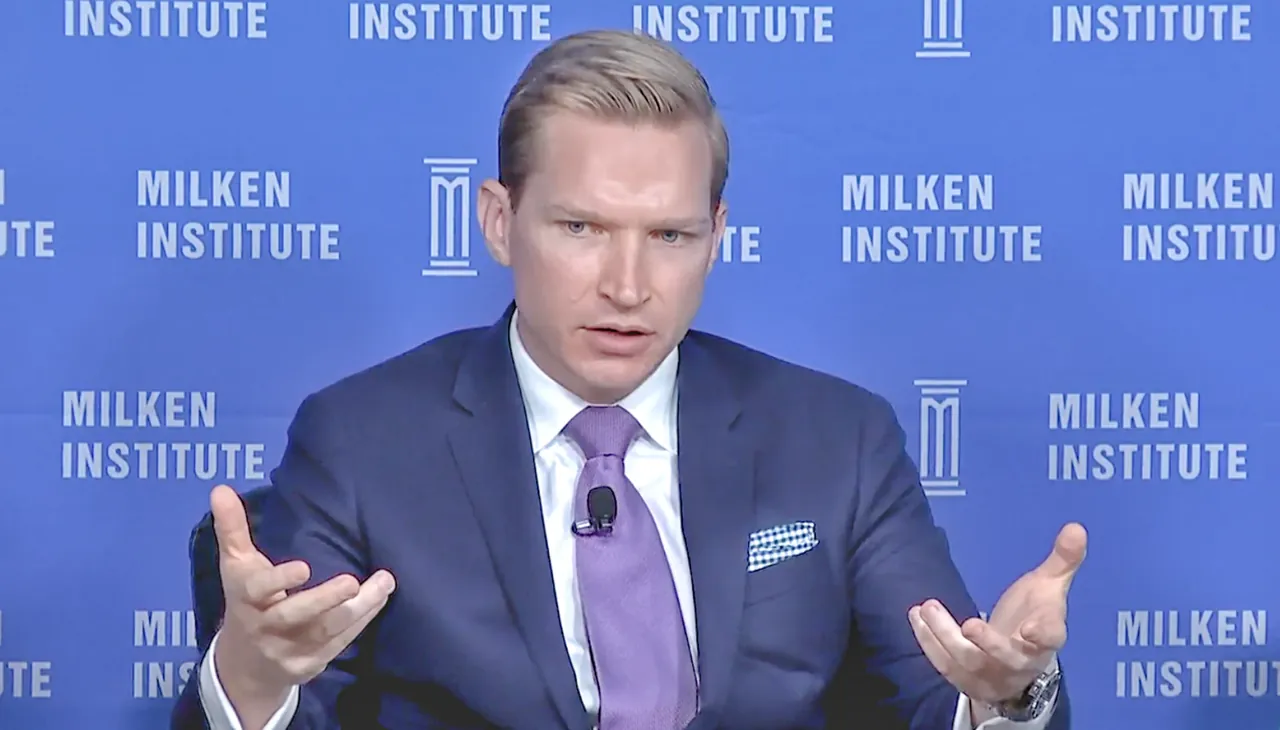
Hart participates in global forums such as the Milken Institute Global Conference and the Aspen Security Forum. He was a Senior Fellow at the Center for the Study of the Presidency and Congress and a member of the Aspen Institute’s Society of Fellows. His work has been featured by ABC News, USA Today, The Boston Globe, and U.S. News & World Report.
Hart holds degrees from Dartmouth College and the University of Virginia Darden School of Business.
Plan your speaking engagement
Send the audience, the format, the date, the location, and the question the session should clarify.