
Research theme
Risk and Resilience
Where perceived stability conceals concentrated risk.
We track how shocks move through the system, where exposure is most concentrated, and how institutions learn and adapt to change.

- 11.9 moChina reserves coverTotal reserves in months of imports
- 10.4%World population 65+Share of total population
- 2.19World fertility rateBirths per woman
What we study
Supply Chains
Chokepoints, single sources, substitution.
Energy Security
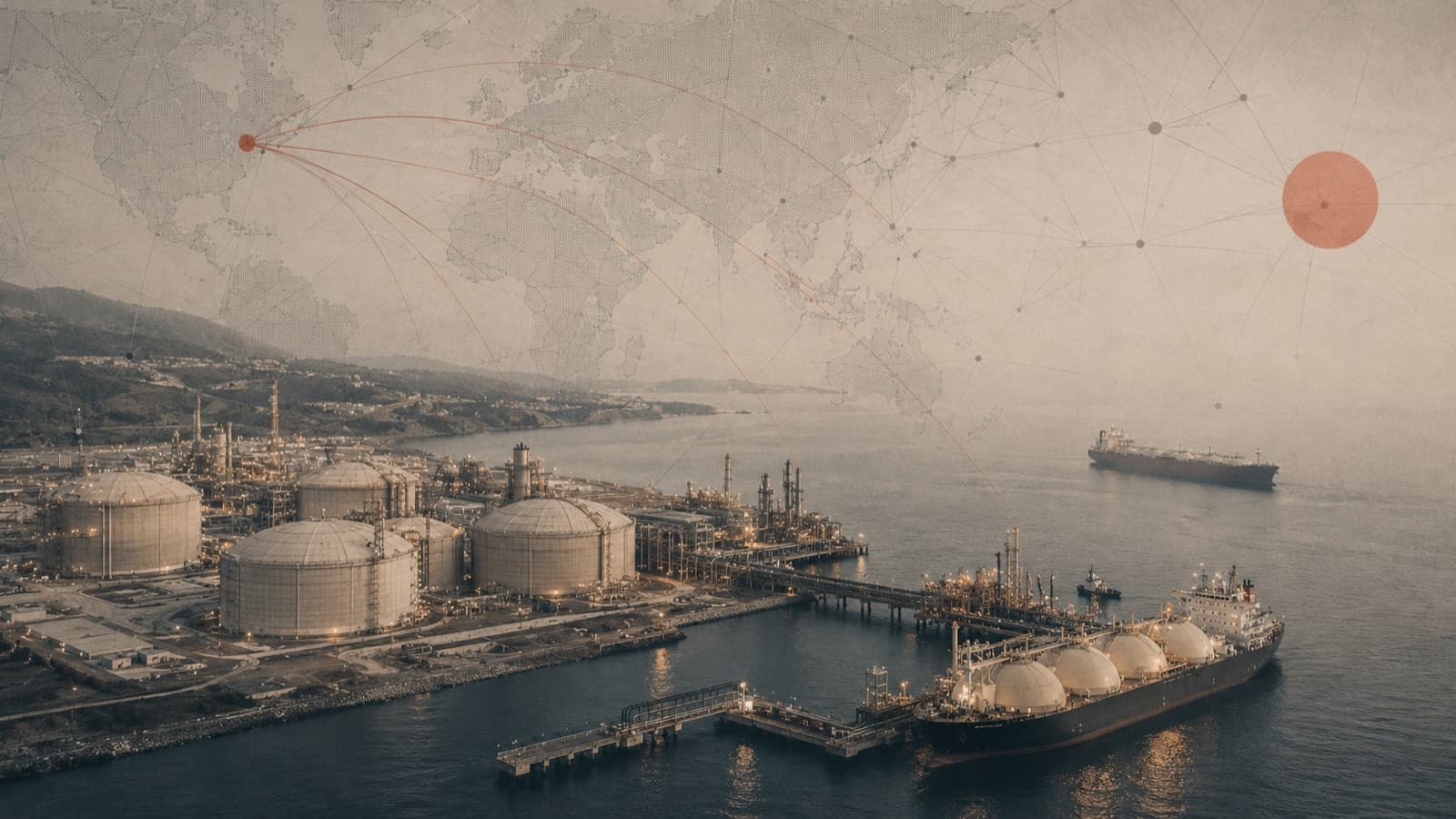
Import dependence, storage, LNG routes.
Climate and Insurance
Reinsurance pricing and physical risk.
Demographics and Migration
Fertility, dependency, and labor supply.
What we believe
The value of resilience can become clearer after a shock.
Efficiency has concentrated production, finance, and logistics in fewer places than the stability suggests: one company's accelerators, one island's fabs, one strait's tanker traffic. We track where redundancy has been engineered out and which price will move first when a shock arrives.
Concentration is the hidden variable.
One supplier's accelerators and one island's fabs sit under most of the world's frontier compute, and no stockpile substitutes for either inside a year.
Currency defense is now a Treasury-market problem.
Japan's yen intervention had to be structured to avoid selling Treasuries because a sale would raise the yields that fund the U.S. deficit.
Aging is the slowest shock and the surest.
Aging can constrain labor supply and increase fiscal pressure. The effects on wages and borrowing costs depend on productivity, migration, and policy.
Featured Research
Latest Research
Jackson Hole and the Conditions for Credible Discretion
Kevin Warsh has pulled the Federal Reserve back from forward guidance. His first Jackson Hole address must show how a more restrained communications regime will preserve a clear monetary-policy rule.
The Saudi Nuclear Deal Tests the Value of American Influence
The agreement could support Saudi industrial development, strengthen the U.S. nuclear sector, and prevent China or Russia from becoming Riyadh’s principal nuclear partner.
The Arsenal as Portfolio
Prime contractors are acquiring options on the future industrial base with a rounding error of capital, and the sequence rather than the sum is what should concern policymakers.
The AI Arms Race Is Becoming a Contest for Industrial Power
The real question is which company can turn capital expenditure into a self-reinforcing system of lower computing costs, stronger models, broader distribution, higher utilization, and recurring revenue.
The Two Energy Superpowers
China and America are competing for the last mile.
Showing 5 of 16
Key questions
How does the shock actually propagate?
Where is exposure most concentrated?
How do institutions learn and adapt?
Which chokepoints matter under stress?